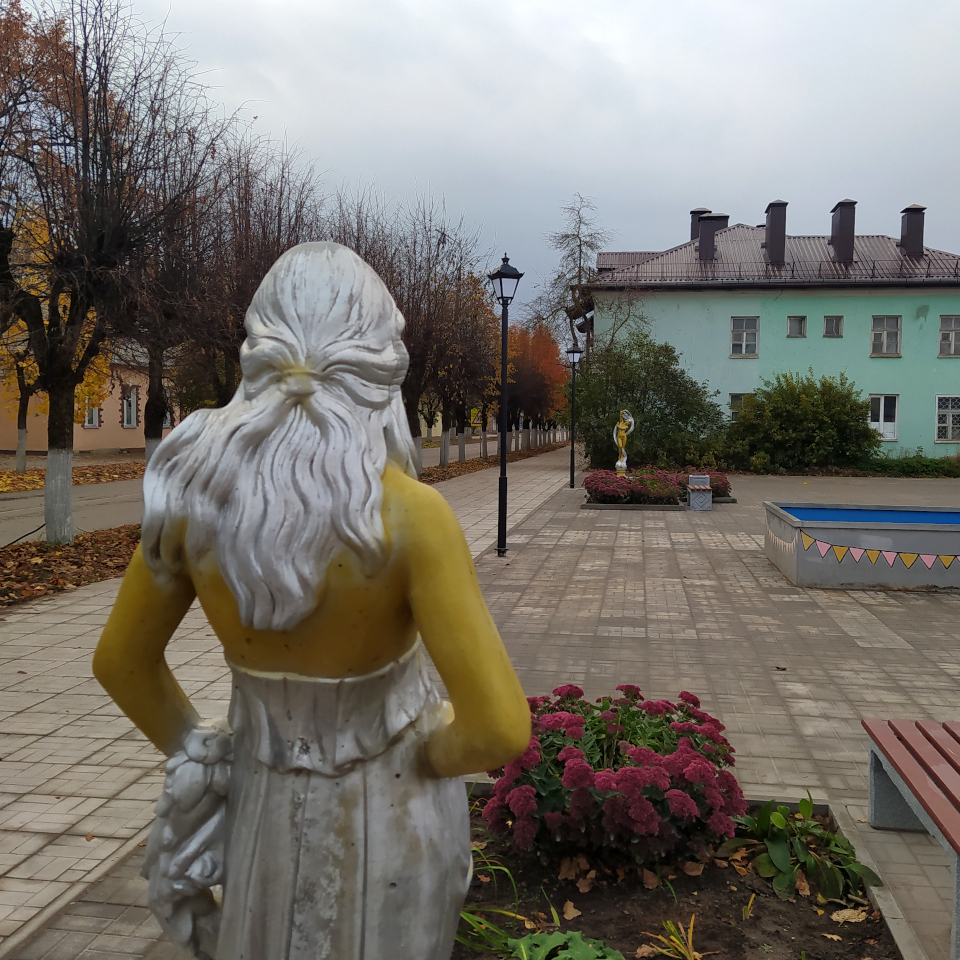
digitized newspaper archive of Gdov township, Russia
1872-1999

Key figures of three years of work:

Years digitized
Years completed
Pages shot
PDFs collated

.

.

.

The Newspaper

A newspaper is what distincts a town from a village

Story of periodic press in Gdov started with Gdovsko-Yamburgsky Listok (Гдовско-Ямбургский листок, Gdov and Yamburg Newsletter) launched in 1872 by prince V.Obolensky and supported by the municipal assemblies of these two counties (uyezd). Some consider it a first newsletter of Russia proper devoted to the rural life in a provincial municipality. Stories of local history also found its place in the newsletter. Since 1874 it changed name to Ezhenedelnik (Еженедельник, Weekly) and went on covering events across the whole Russia proper, leaving little space to Gdov and Yamburg counties.

continue reading...

In 1913 first purely local newspaper was launched in Gdov, being also locally printed at Tomson printing house. By early XX century quite a lot of small-land peasants from the Baltics have migrated to neighbour Russian areas, and as they were almost totally literate, the newspaper contained Russian- and Estonian-language pages. With WWI approaching, the newspaper turned into a single-page newsletter announcing only the most important national and international events.

After the Russian Revolution of February 1917 the newspaper was re-launched under the name of Gdovsky Golos (Гдовский голос, Voice of Gdov), aiming to reform the life on popular grounds. Afte the October (Socialist) revolution the newspaper became news outlet of the local Council (Soviet). The paper has changed names multiple times: Gdovsky Vestnik (1919), Klich Kommunara (1920), Gdovskiye Investiya (1923), Derevenskaya Gazeta (1924) and finally Gdovsky Kolkhoznik (1930).

During the nazi occupation the Germans were issuing their own bulletin for Gdov, Polna and Slantsy districts, while Soviet partisans continued issuing Gdovsky Kolkhoznik in the undercover, using the printing equipment they've evacuated from Gdov. In 1944 the newspaper printing in war-torn Gdov was relaunched, since 1963 the newspaper bears its present name - Gdovskaya Zarya (Daybreak of Gdov).

The newspaper is locally-edited and printed, devoting most of its colorful pages to the domestic events and stories. This allows the 100-year old newspaper to retain popularity among all sorts of media that are now available to the demanding public. Electronic version of certain news pieces is available from the web-site of the newspaper, remote subscriptions to full issues are also available. Mandatory copies of the newspapers are stored in the main libraries of Moscow, St.Petersburg and Pskov, where it is being digitized as well.

Below are the digitized historical issues of Gdovskaya Zarya, scanned from their archival paper copies. Click a year, then click a month to download the PDF.

NB! Files are stored at the Yandex cloud service, if it is blocked in your country, consider using VPN. Files can be bulky, up to 250 megabytes per file.

.

.

.

The Museum

Gdov Area History Museum is hosting the digitizing effort

The Big History being full of wars and destruction often obscures the story of everyday life of humans and peoples. It is even more true for remote localities that get into the Big History mostly as the places of battles. The domestic history, on the contrary, consists mostly of creative and constructive episodes and deeds. With the surviving artefacts, personal accounts and records it explains what kind of people lived here and there, discovers their old trades and crafts, their past needs and accomplishments.

continue reading...

The value of the old stuff in a person's eyes tends to increase with time and distance. It was empress Catherine II of Russia who during her visit to Gdov asked her retinue how much may it cost to the treasury to preserve the deteriorating fortress of Gdov, that had been retired half a century before. Unfortunately, neither then nor a century thereafter enough funds were raised to keep the masterpiece of Pskovian fortification as a monument, not just as a piece of landscape. Yet still the public was getting more concerned with their domestic history, in both Gdov and in St.Petersburg, the latter being also the center of the Governorate.

Stories of the rural life were published in Gdovsko-Yamburgsky Listok of prince V.Obolensky in 1872-1875. Plentiful materiel on Gdov district can be found in 10th issue of Historical and Statistical Notes of St.Petersburg Eparchy (1885), in 3rd volume of Military and Statistical review of the Russian Empire (1851), in 3rd volume of the Universal geographic description of our motherland (1900), as well as in the diaries and letters (1824-1864) of a local landlord A. Druzhinin that have been published lately. In 1919 members of the Geographic Society and the local intelligentsia founded a museum of domestic history. It perished in 1941, shortly after the start of the nazi invasion.

After the war students from Leningrad travelled across the Gdov district and collected vast ethnographic materiel full of personal accounts of past everyday life. Thanks to the interest of the locals to their history, the museum was launched anew, first in the premises of the secondary school, then since 1976 as a separate entity. History of Gdov and surrounding rural area may be learned from the writings of Nikolay Ivanov (On the history of Gdov town - К истории города Гдова, 1956), Pavel Osokin (Gdov - Гдов, 1981), Anatoly Kirpichnikov (Fortress of the ancient Gdov - Крепость древнего Гдова, 2000) and Vladimir Bud'ko (Northern suburbs of Gdov - Север Гдовщины, 2005).

Today the museum exhibits different sorts of artifacts such as pieces of century-old kitchenware, furniture, old photos, fisherman's instruments. We also have contributed to the museum's collection with some archival photos and maps. Staff of the museum welcomes visitors every tuesday to sunday, one may also book a guided tour around the town and to other local places of interest (command of Russian or having a Russian-speaking fellow aboard is suggested).

.

.

.

The Project

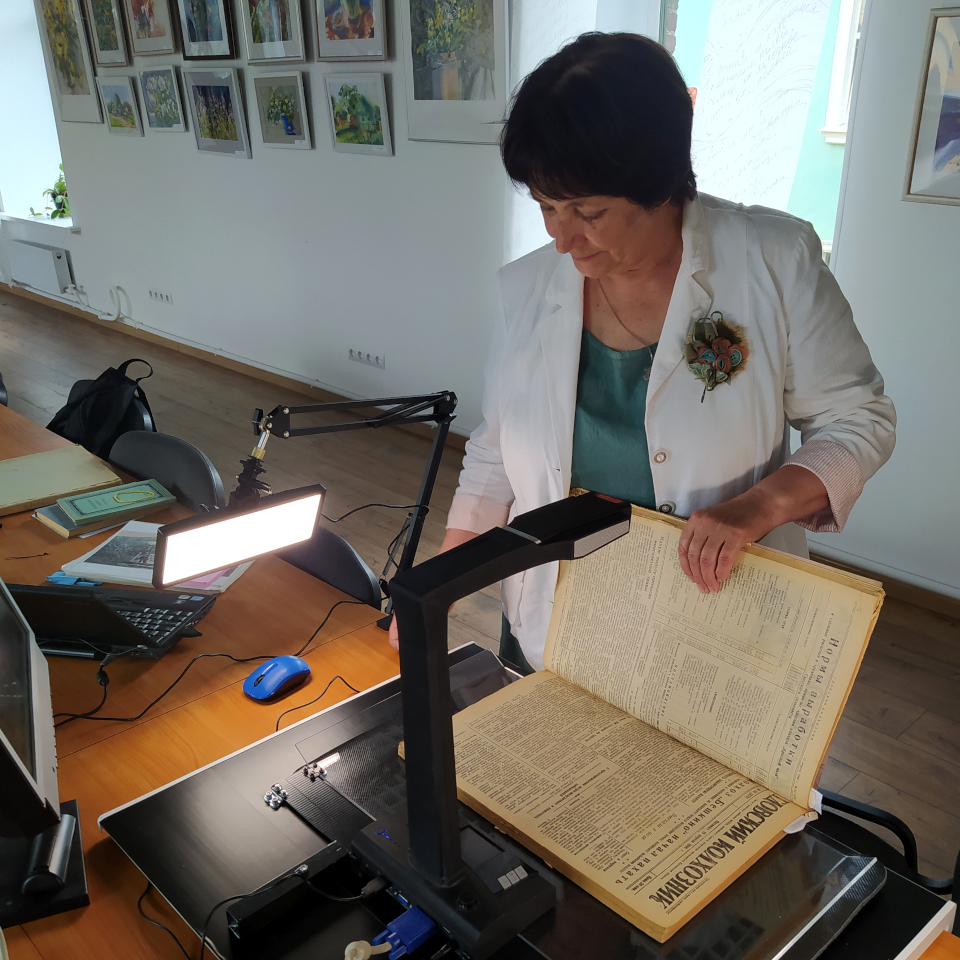
Economical and delicate contact-less scanning

This is a non-commercial, non-government, politically-unaffiliated and NGO-free project to digitize an archive of a local newspaper and to put it online for free.

We have launched this project as a load test: how many pages can our new scanner handle, how interested are citizens of Gdov in our initiative and how firm is our own commitment to reach the final destination of this uneasy path. It all started with a lack of knowledge that we intended to cover working in the museum and doubts that for digitizing we made our bet on the right equipment and using it the right way. At the museum and by the newspaper's chief editor we found understanding and trust, a virtue that is getting increasingly rare now. It boosted our confidence that if we try hard and don't give up, sooner or later the project succeeds. It required a lot of troubleshooting and further development that dragged the process over all expected deadlines. However, we have still been powered by anticipation that besides any practical goals for us, this project is of real value for the community of that remote historical town, as well for the history lovers all across Russia and the world.

continue reading...

The project happened to be very labor-intensive, a year of issues takes some three hours to scan and about the same for images post-processing. So we rely heavily on local volunteers, mostly school students and their teachers, who are ready to invest their free time in this project. The scanner and the software were selected in understanding that the operators are not experts in digitizing and the rural municipalities have no bugdet to purchase expensive gear or to employ trained staff from the outside. The volunteers benefit from basic training and practice in scanning, but also seize a unique opportunity to read old yellowish sheets, telling stories about how their grandparents managed to build a new decent life on the ruins left by the war. Town's revival were not possible without ambitious ideas, hot disputes and healthy competition that found its place in the newspaper articles. While the story of the town and the municipal paper continues evolving, we are helping to preserve the past as the necessary foundation for the future. You are welcome to download and read the newspapers we've scanned, a smartphone with a camera and image translator application will help you reading Russian.

.

.

.

The Town

A town on the Western edge of contiguous Russia

Gdov is one of the smallest historical towns of Russia, located on the Eastern coast of lake Chudskoye that separates Russia and Estonia. Fortress of Gdov, erected by Gdovka river near the lake, was one of the chain of borderline fortresses stretching from the South (Sebezh) to the North (Ivangorod), protecting the medieval principalities of Novgorod and Pskov from incursions from the West. Famous Battle on the Ice took place not far from Gdov to the South. Gdov was first mentioned in chronicles 700 years ago; in 1431 Pskovians hired some 300 fortification masters to construct a permanent stronghold made of stone and wood. Walls were built the left bank of Gdovka, being much wider and deeper by then, where the river meets Staritsa stream, protecting the other two sides of the square fortress with a deep grave. Livonian Chronicle of XV century reads that "...the Russians have constructed on their side of Peipus, three miles away from the lake a castle with a monastery, known as Voldov, or Oudov as they call it".

continue reading...

The fortress was a tough military target, it withstood multiple sieges of Livonians, Swedes and Poles. Invasions of 1581 (Poland) and 1611-1621 (Sweden) appeared especially tough for the town, but thanks to the recovering trans-border commerce that used to run through Gdov, the town also recovered and did not share the fate of other borderline strongholds that were ruined and vanished. Core trades of the local inhabitants were agriculture, fishing and flax being the best in Russia. After the Great Northern War (early XVIII century) the town continued expanding: by 1627 there were 281 men recorded to live in town, whereas 200 years later some 1000 men and women were recorded living in 176 residential houses. In 1781 empress Catherine II approved a coat of arms for Gdov. Roughly by the same period there was a campaign of regular planning of towns and cities all across the imperial Russia, meaning they have to develop further along the straight lines of existing and projected streets. This approach was applied to Gdov and its present-day plan echoes two centuries old urban planning effort. Liberation of peasants in 1861 enabled industrial growth in the country, including vast - 100 by 150 km - Gdov area. Matches factory Sphinx, wheat mills and sawmills were founded there during second half of XIX century, as well as first trade school. Standing somewhat aside of main transit routes Gdov lacked roads, and this problem was properly addressed by the end of XIX century, when the old postal road between Pskov and Narva, along Pskovskoye and Chudskoye lakes was rebuilt and harbour facilities of Gdov were improved. Once WWI started, the government funded construction of a railroad between Pskov, Gdov and Narva for defence needs, but it also contributed to economy of the region. New roads connecting Gdov to the Baltics, combined with abundance of scarcely-populated land also attracted poor Estonian and Latvian settlers into the area.

During the Russian Civil war (1918-1921) Gdov was briefly occupied by North-Western Army and foreign mercenaries, until after much fighting with Red Army in 1919 it finally became borderline town of Soviet Russia. Most devastating was the nazi occupation 1941-1944, when two thirds of the local residents died, 606 of 640 pre-war buildings of Gdov destroyed. Major share of town's destruction, including St.Dmitry's Cathederal and Uspenie Church was done by notorious 37-th SS Police regiment recruited in Estonia, that burned down and blasted all existed residential and public buildings three days before the Red Army approached the town. From 1945 onwards Gdov has been rebuilt anew, what is easily noticed from its current look. Local industries were comprised of a fishery, canned food and diary products factories, sawmill and an electrotechnical appliances plant. There were two schools and a wide-screen movie theatre in town. Throughout 1960-1980-ties small commuter aircraft serviced flights to Pskov, Slantsy and Narva, bus and train connected Gdov with Pskov and Leningrad, ferries to Tartu were available occasionally. Late 1980-ties local orthodox priest donated his personal savings to rebuild a late medieval church in Gdov fortress, destroyed in 1944. The church being itself a replica of the one that existed there before was made after the classic Pskovian designs and opened its doors in 1993. One of the few surviving historic buildings is the mansion of commersant Boyarinov on the main street of the town, that now hosts the local museum.

One may reach Gdov by car or by buses - from Pskov or St.Petersburg a few times a day. For any visitor to town a walk or a drive to the lake is a definite must, especially to village Vetvenik where one may find a beautiful church of Peter and Paul, that survived through a century of militant atheism and godless hostilities. Visiting the lake outside of Gdov implies borderline visit permit obtained beforehand.

Below you may scroll through a small photo gallery of Gdov and Chudskoye lake coast.
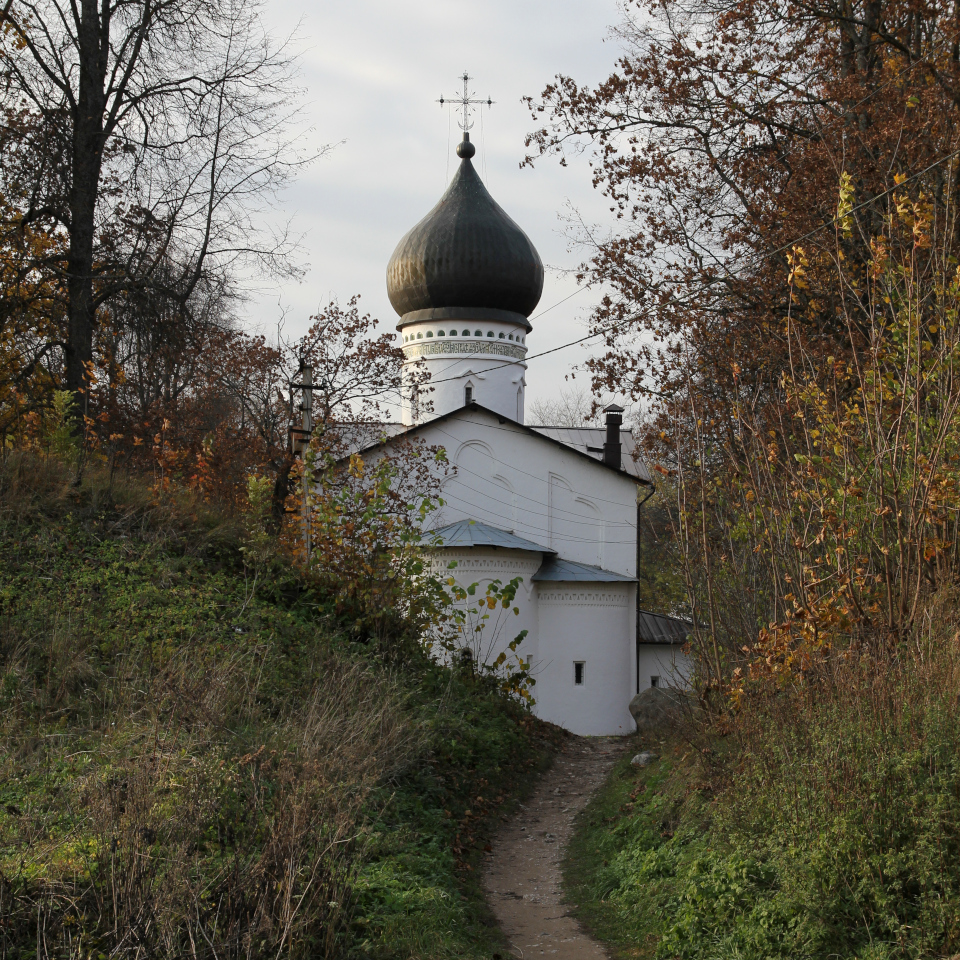
Cathederal in Gdov fortress

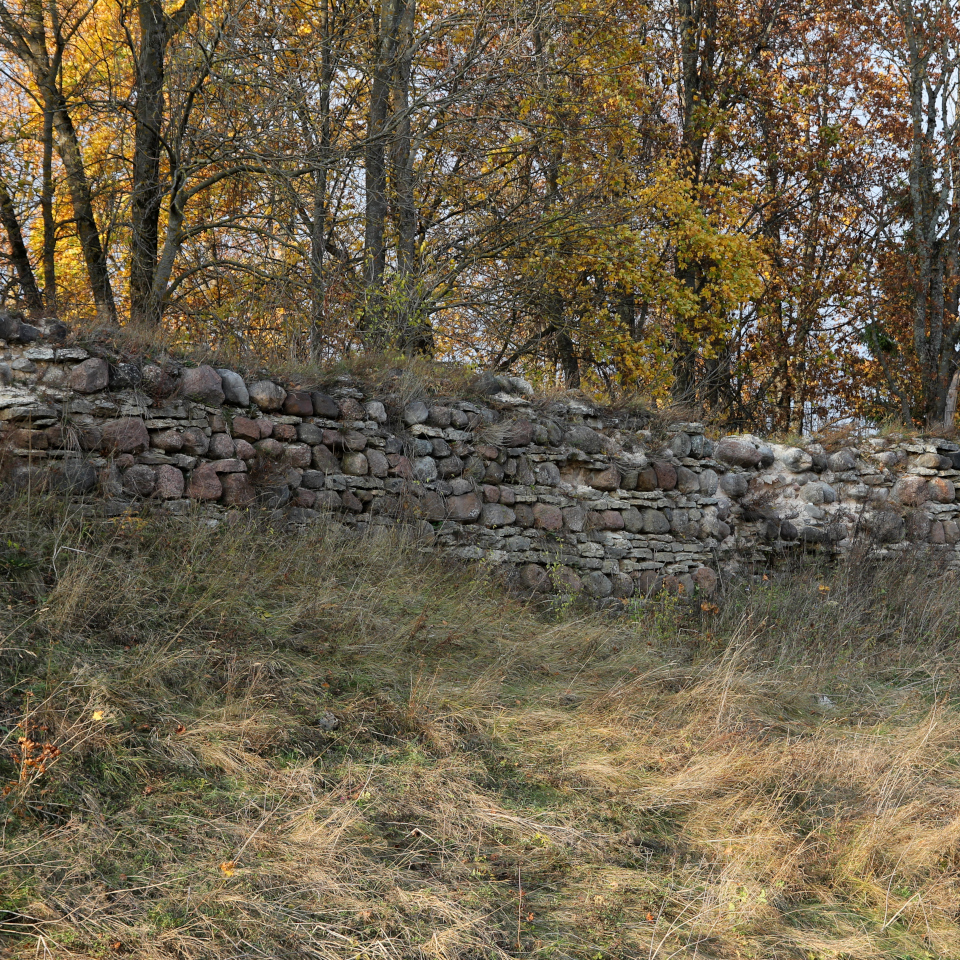
Surviving fortress walls

Walls by the Pskovian Gate

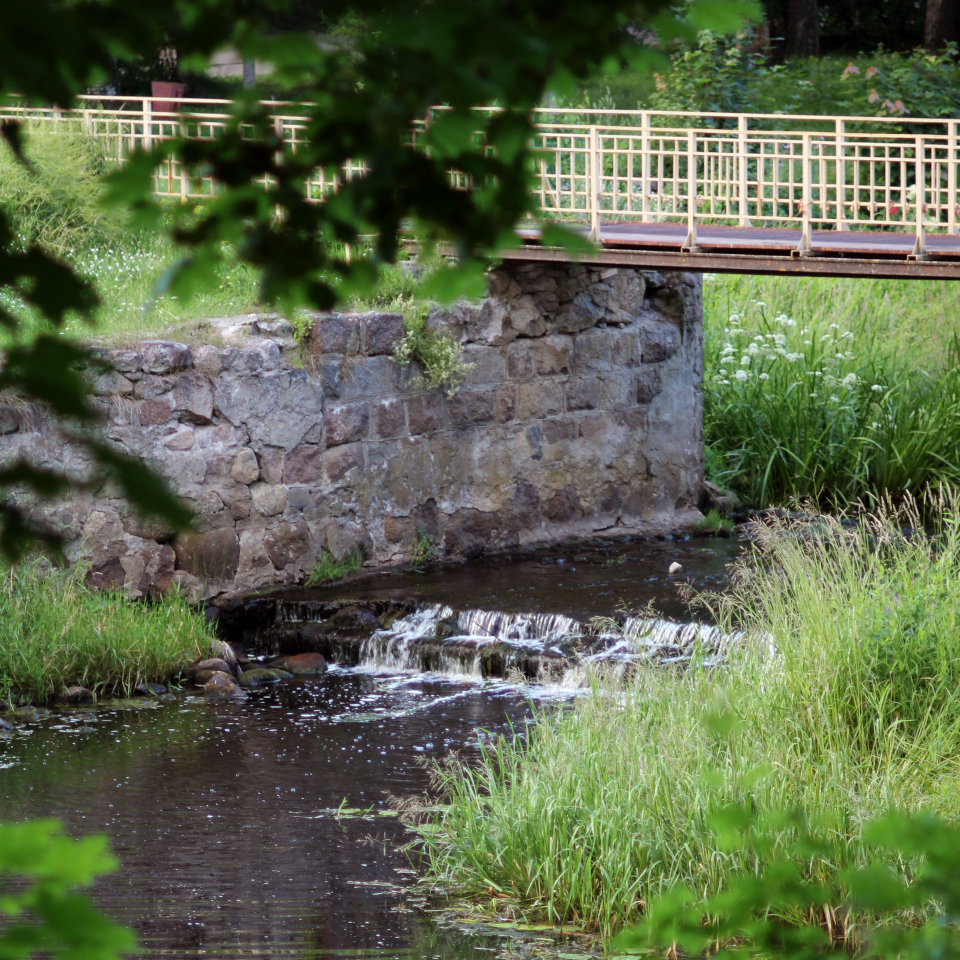
Waterway on Gdovka river

Nadezhda Singatullova, museum director

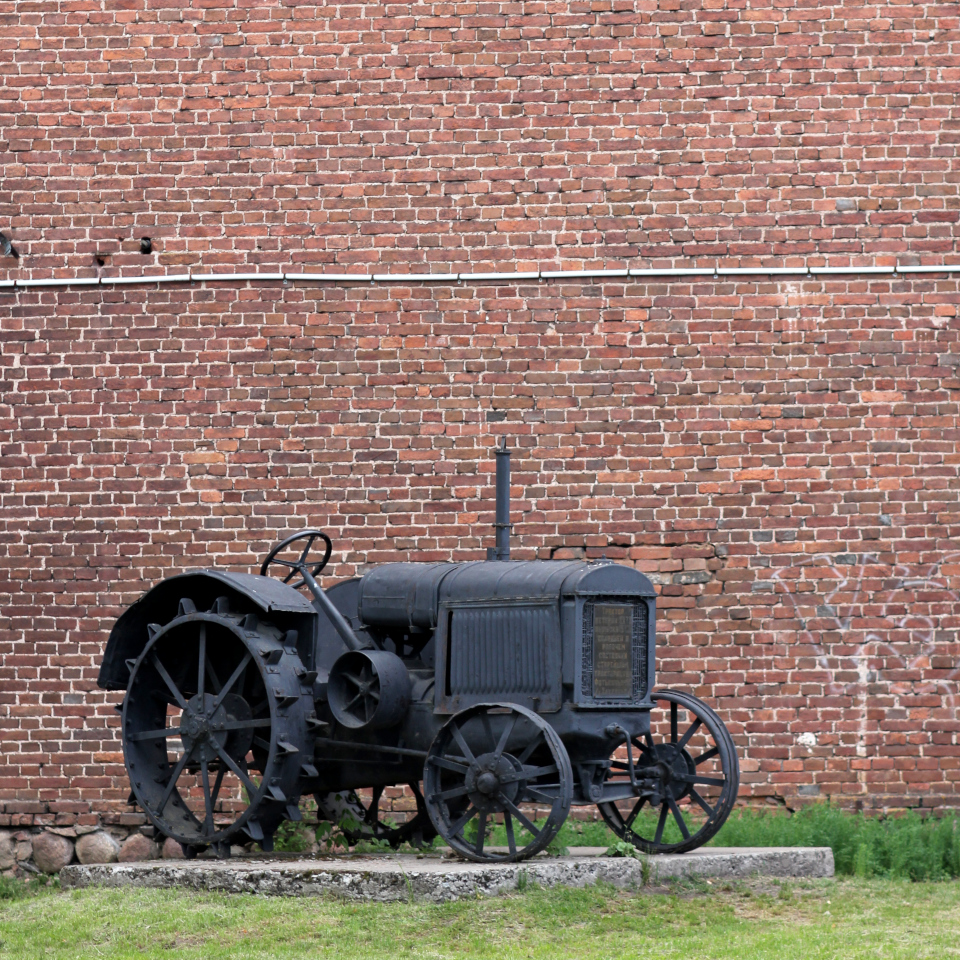
Old tractor by the museum

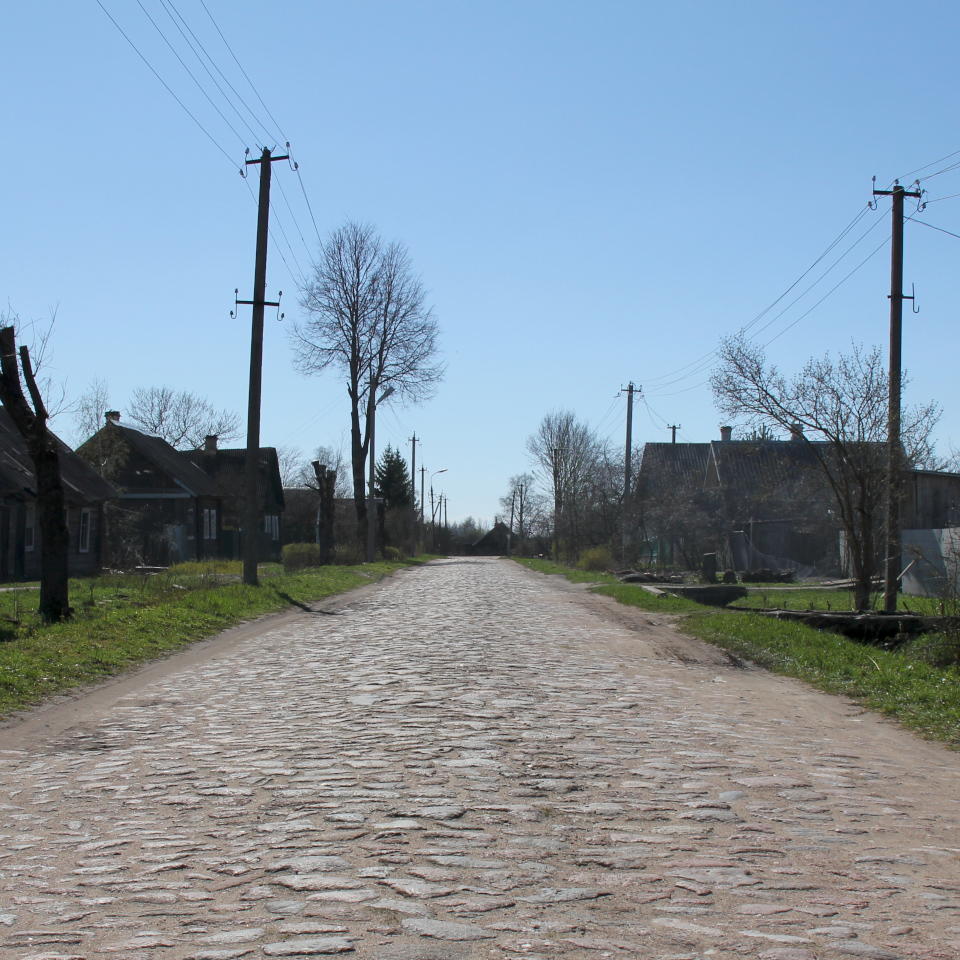
An old paved road

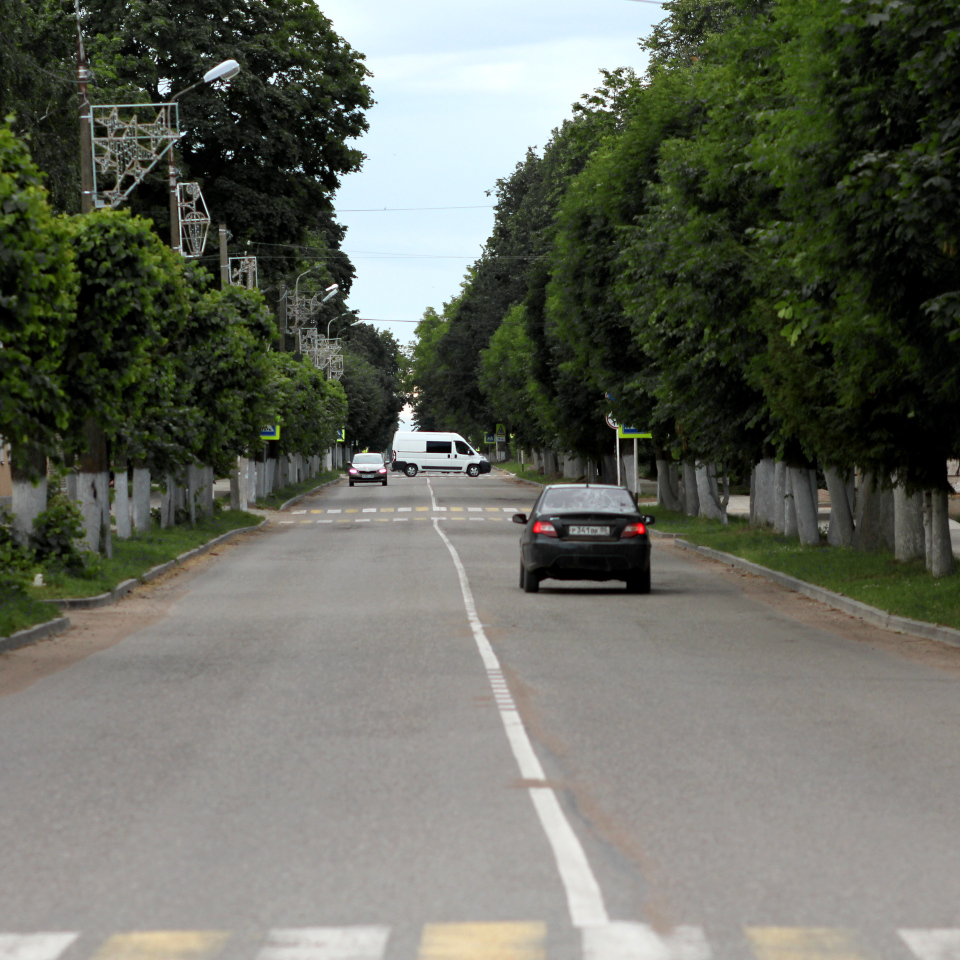
Main street of the town

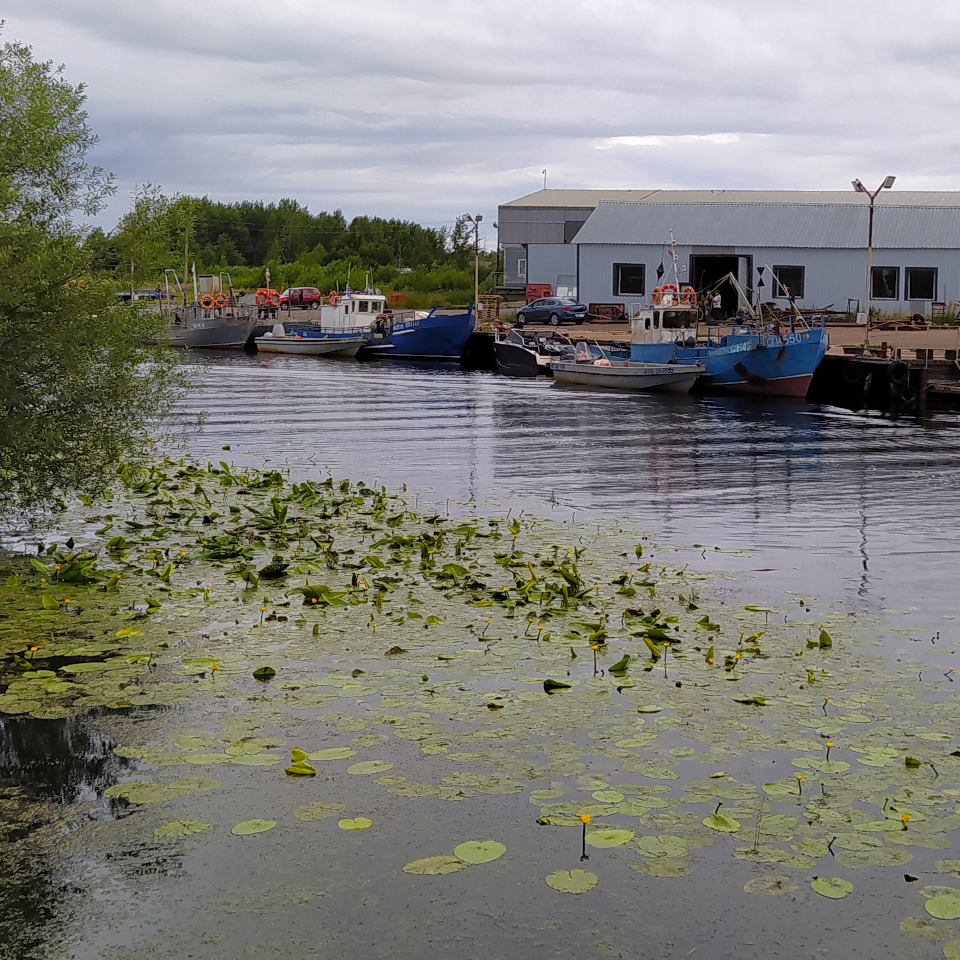
Fishery in the mouth of Gdovka

Fishery's client

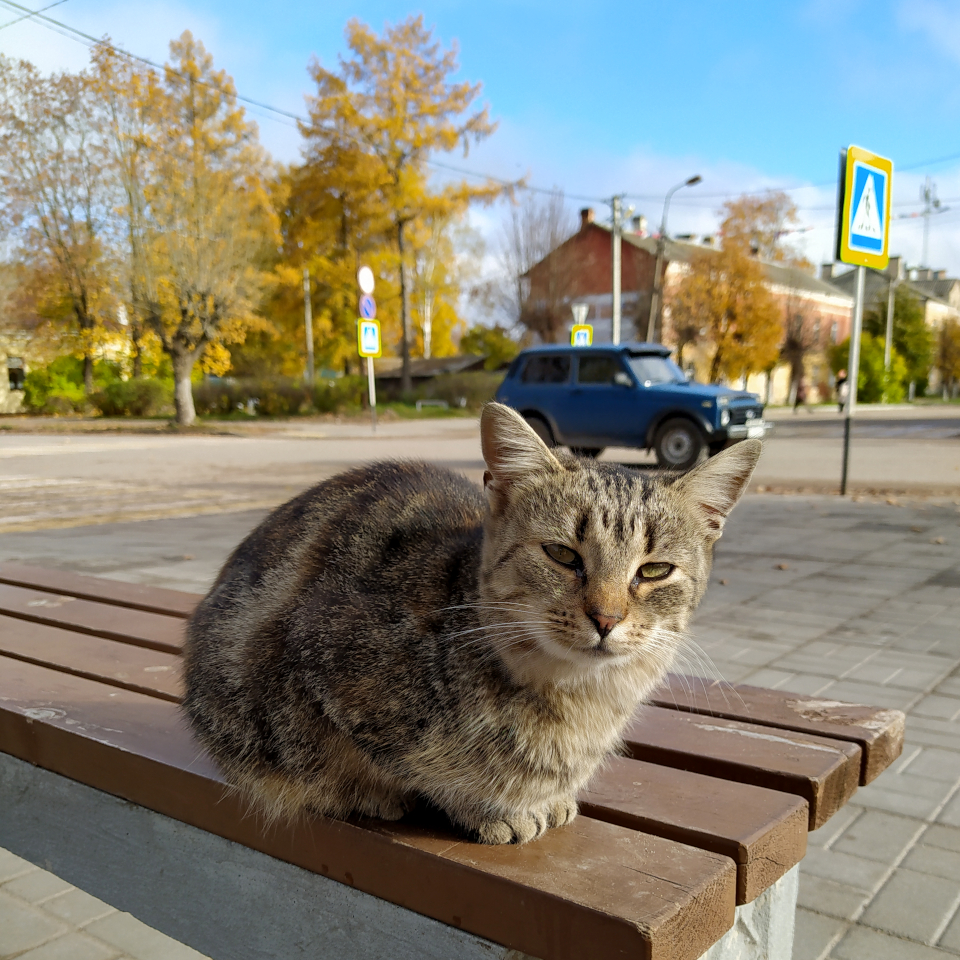
Downtown Gdov

Old church in Vetvenik

A hostel by the lake

Evening on the lake

Sunset over old dam

Chudskoye lake

Coast in winter

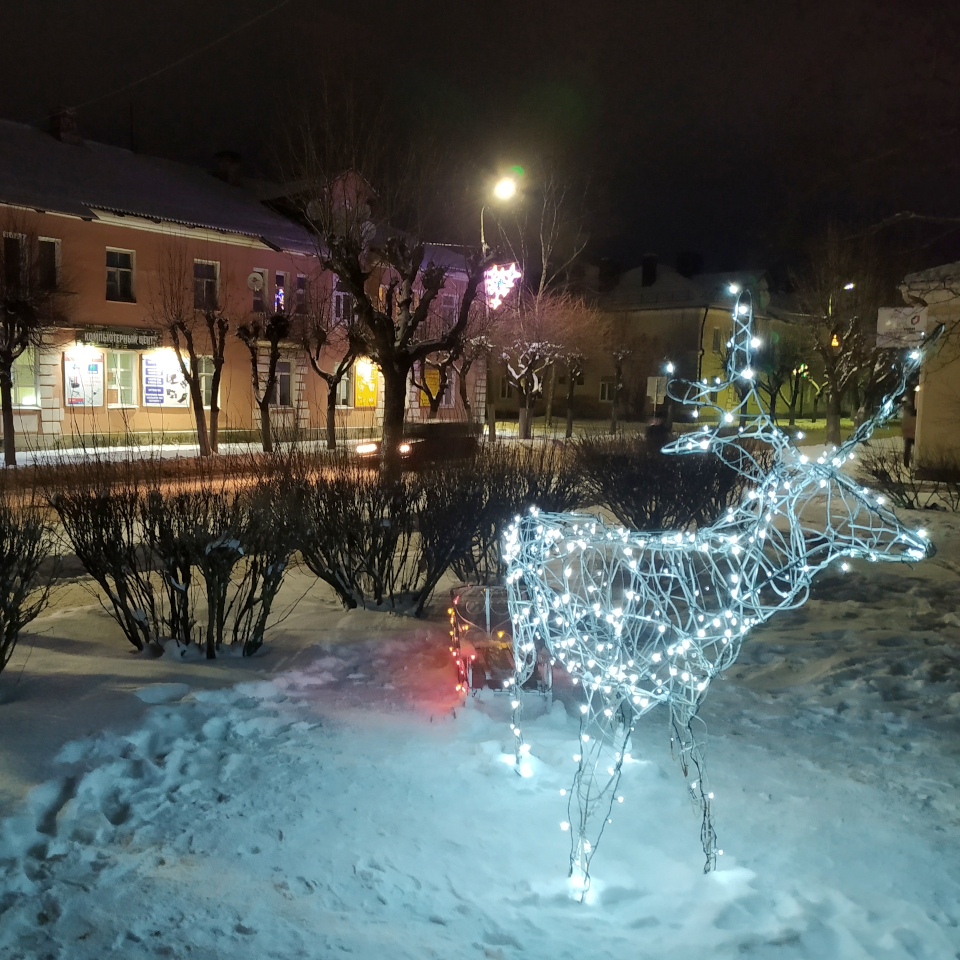
New Year season

.

.

.

LOADING...